
CASE STUDYSensing inside cells
WhatIS SENSING INSIDE CELLS?
When we think about healthcare, we often think about technologies that help doctors diagnose or treat disease. But before we can do that, we first need to understand what is happening inside the body's cells.
Many diseases begin with tiny changes inside cells long before symptoms appear. However, measuring what is happening at this scale can be extremely challenging.
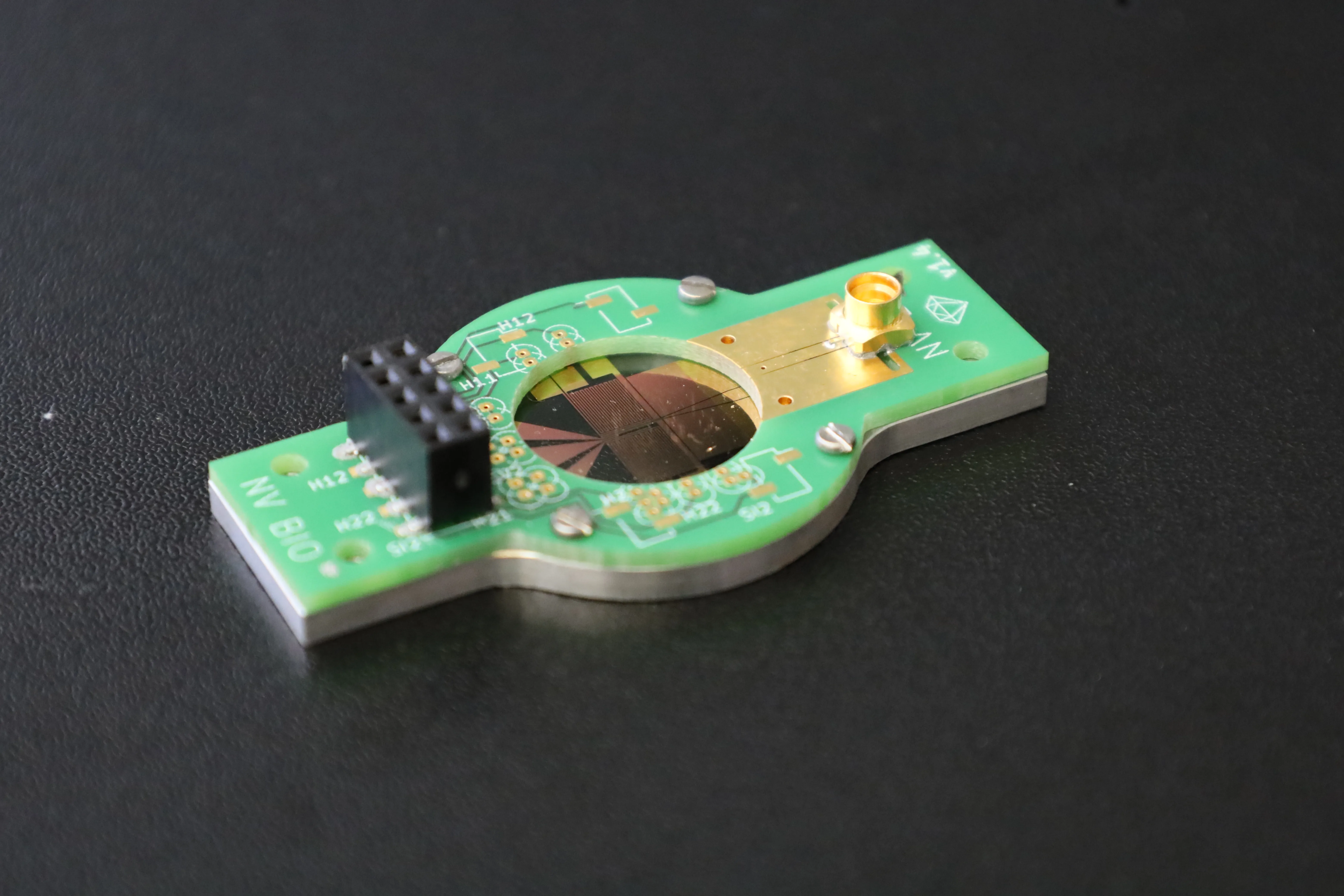
This is where the Quantum Biosensing Chip (Q-BiC) comes in. Q-BiC allows researchers to place tiny quantum sensors, called nanodiamonds, inside living cells and organisms. These nanodiamonds contain special atomic features known as nitrogen-vacancy (NV) centres, which can act as highly sensitive quantum sensors. They can measure properties such as temperature, acidity (pH) and magnetic fields at an incredibly small scale.
By monitoring these signals from inside living cells, researchers can gain new insights into how cells function, how diseases develop and how the body responds to different treatments. This could help answer fundamental biological questions that have previously been difficult to study.
Scientists have long wanted to measure what is happening inside living cells in real time, but this is difficult because cells are tiny, complex and easily disturbed by measurement techniques.
Quantum sensors based on nanodiamonds offer a unique solution. They can detect changes in temperature, magnetic fields and other properties with extremely high sensitivity and at a scale much smaller than a single cell. Unlike many conventional measurement methods, they can provide information from specific locations inside living biological systems.
One challenge has been using these sensors safely inside living cells and organisms. The quantum measurements require specialised hardware, including microwave signals, which must be delivered without damaging the biological system being studied.
Q-BiC was developed to overcome this challenge. The chip combines temperature control and biocompatible sensor operation, allowing researchers to perform quantum measurements while keeping cells and organisms healthy. This opens the door to studying biological processes in ways that were previously difficult or impossible.
Q-BiC is primarily a research tool rather than a technology that will be used directly in hospitals. However, it has the potential to contribute to future healthcare advances by helping scientists better understand the biology of disease.
Researchers can use Q-BiC to investigate what happens inside cells as diseases develop and progress. For example, changes in cellular temperature, metabolism and other physical properties can reveal important information about how cancer cells behave or how cells respond to stress, infection or treatment.
By building a more detailed picture of these processes, scientists may be able to identify new biological markers of disease, uncover previously unknown mechanisms that drive illness.
In the longer term, this knowledge could support the development of new diagnostic approaches and more targeted treatments. While patients may never interact directly with a Q-BiC device, discoveries made using the technology could influence the healthcare tools and therapies of the future.
Although scientists have learned a huge amount about human biology, there is still much we do not understand about what happens inside cells during the development of disease.
Many of the biggest healthcare challenges, including cancer, dementia and infectious diseases, are driven by biological processes that occur at the cellular level. To develop better diagnostics and treatments, researchers need new tools that can reveal these processes in greater detail.
Q-BiC provides a way to study living cells using highly sensitive quantum sensors while minimising disruption to the biological system being observed. By helping scientists understand disease at its earliest stages, the technology could contribute to the next generation of medical discoveries.
RESEARCH
Researchers worldwide are driving progress in this area with UK universities and industry playing an important role through the EPSRC-funded Q-BIOMED and QUSIT Hubs.

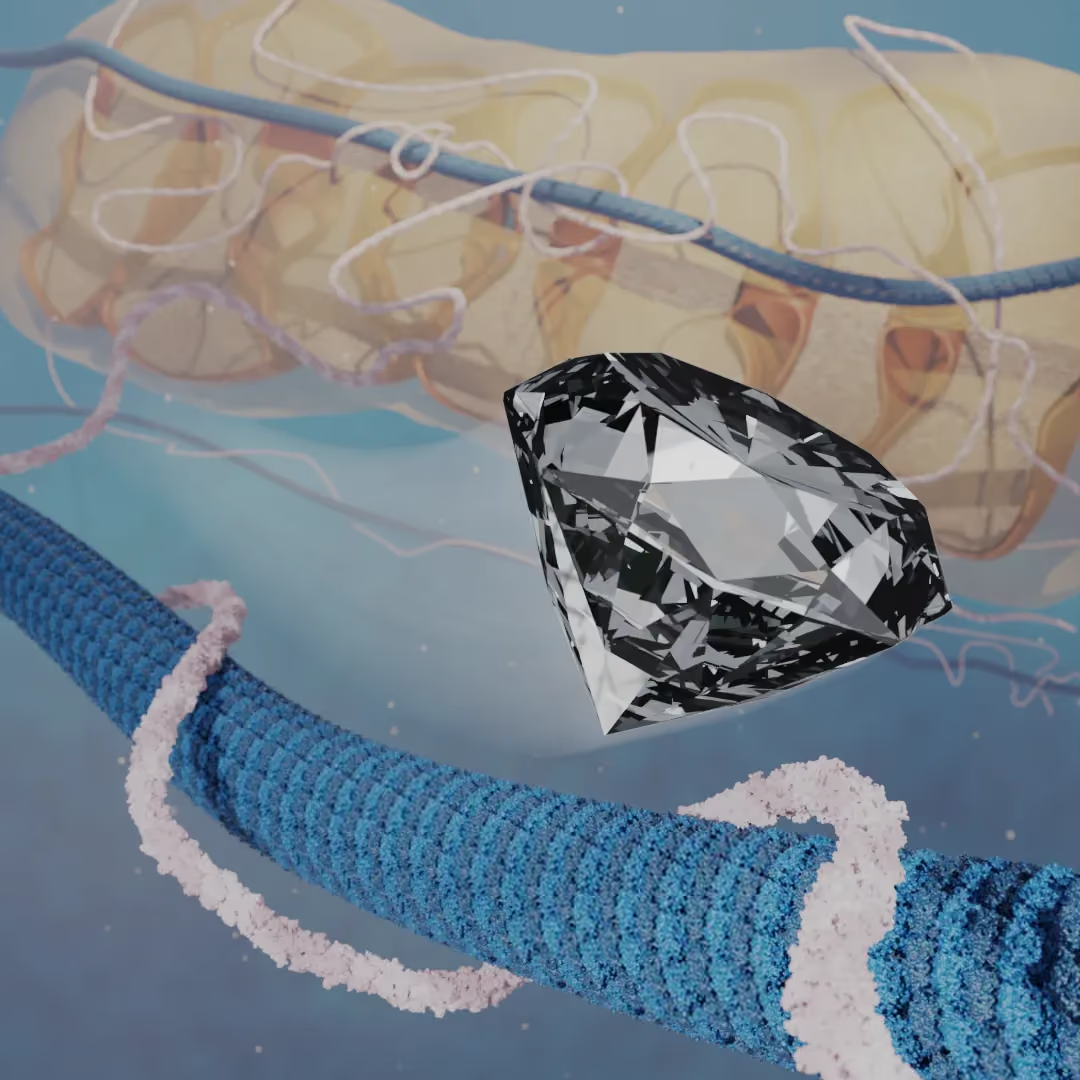
A nano-diamond in a cell illustrated by Q-BIOMED researcher Jack Hart.