
CASE STUDYDeveloping new drugs
HowCAN QUANTUM COMPUTING HELP TO DEVELOP NEW DRUGS?
Quantum computing is a new type of computing that uses the principles of quantum physics to process information in fundamentally different ways from today's computers. Conventional computers use bits that represent either a 0 or a 1. Quantum computers use quantum bits, or qubits, which can represent multiple states at the same time. This allows quantum computers to explore many possible solutions more quickly than today’s computers for certain types of complex problems.
Drug discovery is one area where this capability could have significant impact. Developing a new medicine is a lengthy and expensive process, often taking more than ten years from initial research to approval, at a cost of many hundreds of millions. Much of this time is spent understanding how molecules interact, identifying promising drug candidates and testing their properties. Quantum computing has the potential to model these molecular interactions with much greater accuracy than is possible using conventional computing alone, helping researchers make better-informed decisions earlier in the development process.
Conventional computers can only approximate the behaviour of complex molecules, because accurately modelling the quantum mechanics of atoms and electrons requires enormous computing power. As molecules become larger, the number of possible interactions grows rapidly, making precise simulations impractical even for today's most powerful supercomputers.
Quantum computers are designed to work with problems that follow the rules of quantum physics. This makes them particularly well suited to simulating molecular systems and chemical reactions. Rather than relying on simplified models, they could provide a more realistic picture of how a drug binds to a target protein, how stable a molecule is, or how small changes in its structure affect its performance.
Although current quantum computers are still developing and cannot yet replace conventional computing, hybrid approaches that combine classical and quantum methods are already being explored for some stages of pharmaceutical research.
Pharmaceutical companies, technology providers and research organisations are investigating how quantum computing can accelerate different parts of the drug discovery process. One promising application is molecular simulation, where quantum computers could improve predictions of how drug candidates interact with disease targets before laboratory testing begins.
Quantum computing may also support virtual screening, enabling researchers to evaluate large numbers of potential compounds more efficiently and identify the most promising candidates for further development. Other potential applications include optimising chemical synthesis, improving machine learning models used in drug design and supporting personalised medicine by analysing complex biological data.
In the near term, quantum computing is expected to complement, rather than replace, existing computational tools. Researchers will continue to combine artificial intelligence, high-performance computing and laboratory experiments with quantum algorithms to improve efficiency while reducing the time and cost of developing new medicines.
Healthcare systems face increasing pressure to deliver new medicines more quickly, reduce development costs and improve patient outcomes. Many diseases remain difficult to treat because existing methods cannot fully model the complexity of biological systems. Quantum computing offers the potential to improve understanding of molecular behaviour, helping researchers identify promising treatments sooner and reduce the number of unsuccessful drug candidates entering costly clinical trials. While the technology is still maturing, continued advances could make drug development faster, more efficient and more targeted over the coming decade.
- Designing more effective cancer treatments through improved molecular modelling.
- Accelerating the discovery of new antibiotics to address antimicrobial resistance.
- Developing medicines for rare diseases where research resources are limited.
- Improving personalised medicine by matching treatments to an individual's biology.
- Predicting drug safety and side effects earlier in development.
- Optimising manufacturing processes for complex pharmaceutical compounds.
RESEARCH
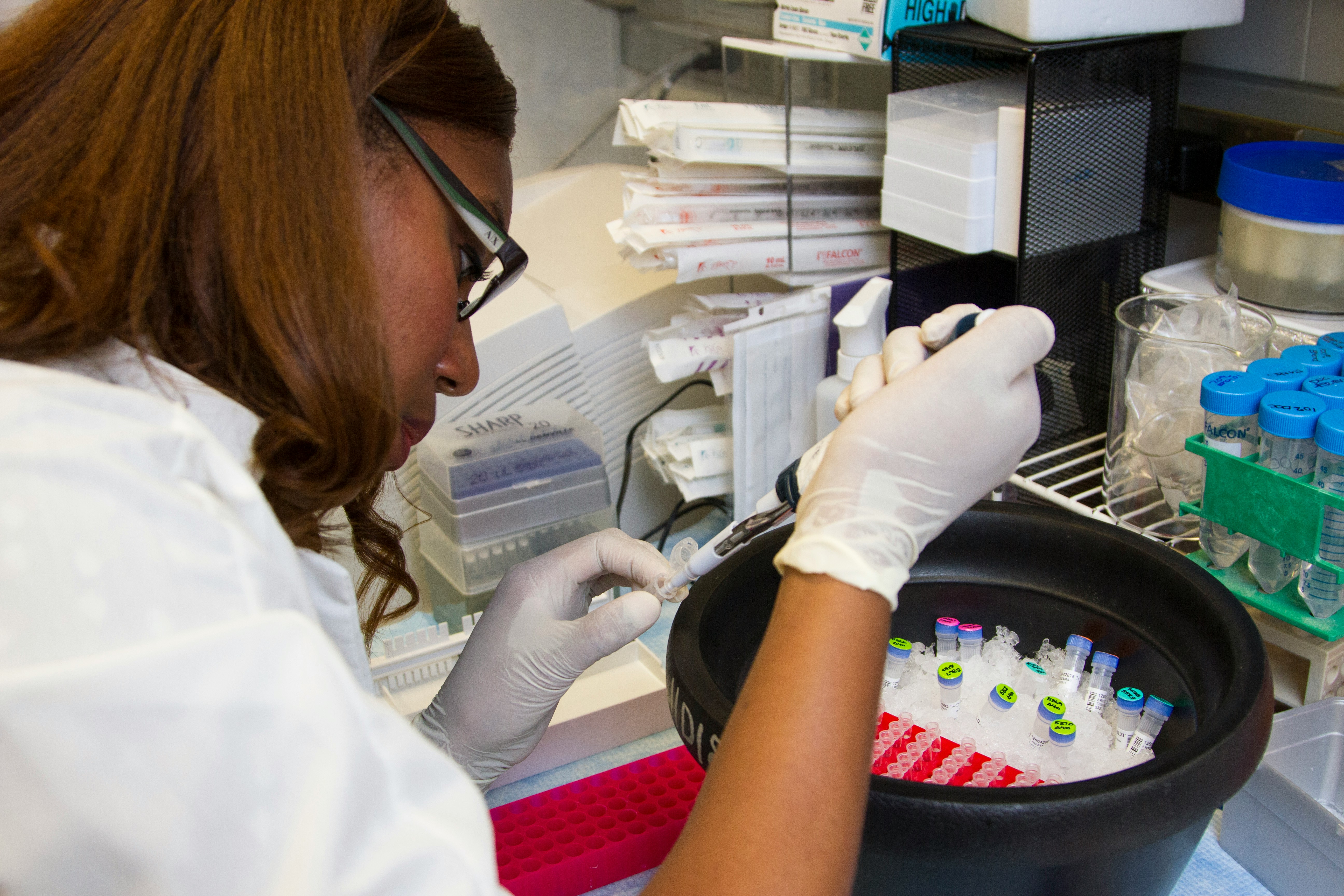
Researchers worldwide are driving progress in this area with UK universities and industry playing an important role through the EPSRC-funded QCi3 Hub.