
CASE STUDYDetecting diseases: quantum-powered lateral flow tests
WhatARE QUANTUM-POWERED LATERAL FLOW TESTS?
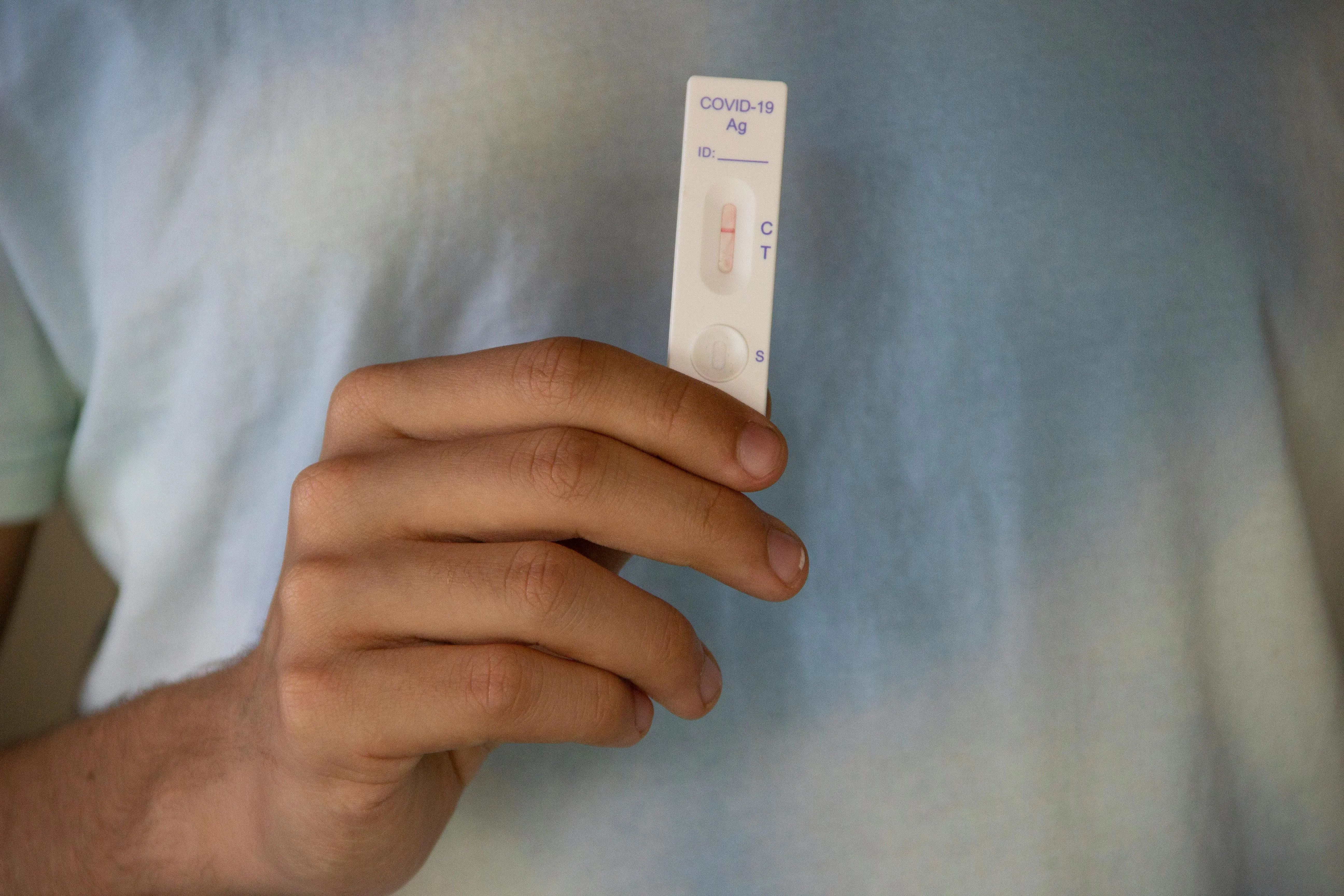
Lateral flow tests are one of the fastest and easiest ways to detect disease. They are cheap, portable and can often give results in just a few minutes. Many of us became familiar with them during the COVID-19 pandemic.
However, traditional lateral flow tests can struggle to detect disease when only small amounts of a virus or other biological marker are present. This means they may miss infections at a very early stage.
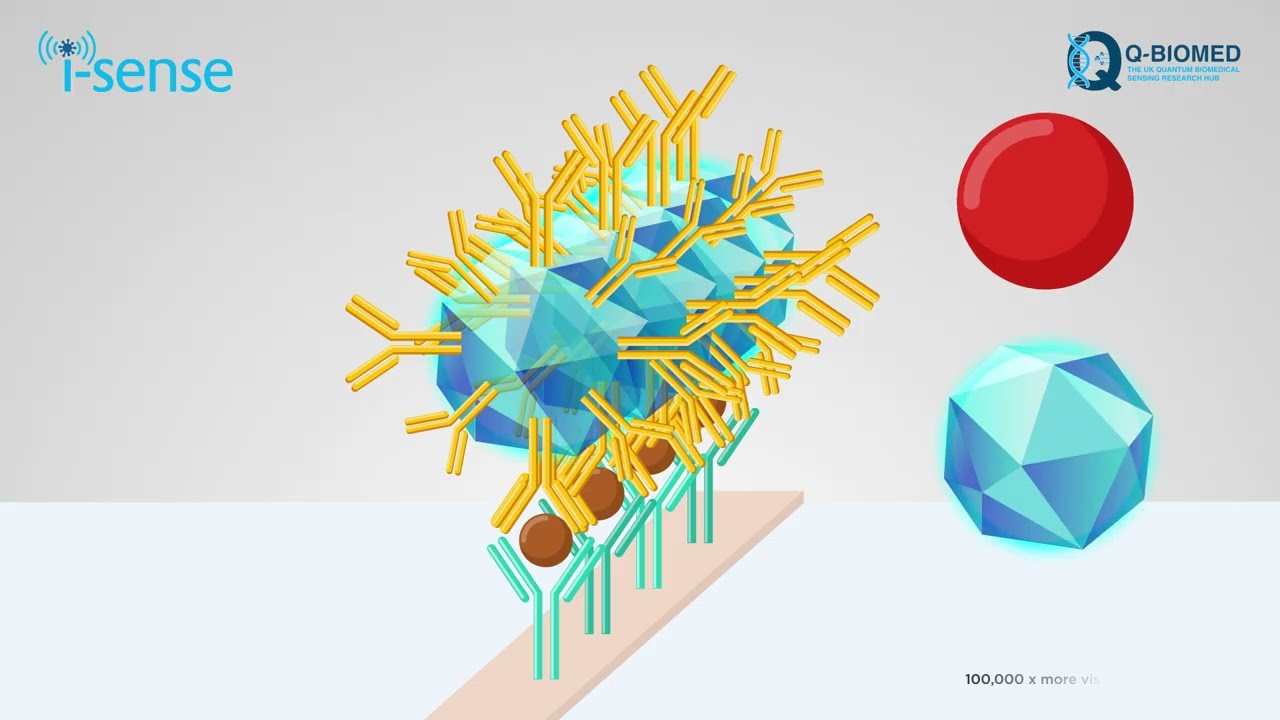
Researchers are developing a new generation of lateral flow tests that use tiny diamonds, thousands of times smaller than a grain of sand. These diamonds contain special atomic defects called nitrogen-vacancy (NV) centres, which have unique quantum properties. When illuminated and measured in the right way, they produce a highly detectable light signal.
By using these quantum-enabled nanodiamonds as labels, researchers can detect much smaller amounts of disease markers than is possible with conventional tests. This could allow diseases to be identified earlier, helping people access treatment sooner and reducing the spread of infectious illnesses.
Most conventional lateral flow tests use gold nanoparticles or latex beads to create the coloured line that indicates a positive result. While effective, the signal produced by these particles can be difficult to distinguish from background noise when only tiny amounts of a target are present.
Quantum-powered lateral flow tests replace these gold nanoparticles with fluorescent nanodiamonds containing nitrogen-vacancy (NV) centres. These NV centres emit red light when stimulated, and their quantum properties allow researchers to separate the nanodiamond signal from unwanted background signals.
You can think of it like trying to hear a single voice in a crowded room. Conventional tests listen to everything at once, while quantum-enhanced tests can tune in specifically to the signal coming from the nanodiamonds.
This dramatically improves sensitivity. In laboratory studies, the technology demonstrated approximately a 1,000-fold improvement in analytical sensitivity compared with equivalent gold nanoparticle tests. In clinical studies using COVID-19 samples, the increased sensitivity allowed the nanodiamond tests to detect infections around two days earlier and identify more cases during the earliest stages of illness.
Using diamond might sound expensive, but because these nanodiamonds are so small, using them is similar in cost – if not cheaper – than the gold nanoparticles used in conventional lateral flow tests.
The goal is to create a new generation of rapid diagnostic tests that combine the convenience of lateral flow testing with the accuracy of laboratory-based methods.
Initially, the technology is being explored for infectious diseases such as COVID-19, where early detection can help people isolate sooner, access treatment more quickly and reduce transmission. But the same approach could be adapted to detect a wide range of other diseases and health conditions by changing the biological molecules attached to the nanodiamonds.
Because these tests rely on reading the amount of light emitted by the diamonds, the technology is currently only able to be read in the lab using specialist equipment. But researchers are also working on developing cheap portable readers, using the camera in a mobile phone, that will allow them to be read anywhere. This could enable testing in GP surgeries, pharmacies, community healthcare settings and potentially even at home.
Ultimately, these quantum-powered lateral flow tests could provide laboratory-quality sensitivity in a rapid, easy-to-use format, bringing advanced diagnostics closer to where patients live and receive care.
In healthcare, early diagnosis is key and can make a huge difference to patient outcomes. That’s because the sooner a disease is detected, the sooner treatment, monitoring or infection-control measures can begin.
Current rapid tests are convenient but can miss cases when disease markers are present at low levels, and sending samples away for laboratory testing can lead to delays in obtaining the results. Quantum-powered lateral flow tests aim to bridge the gap between laboratory testing and simple point-of-care diagnostics by providing much higher sensitivity in a fast, portable format.
This could help identify infections sooner, reduce disease transmission and make advanced diagnostic testing available in more places, from hospitals and pharmacies to community settings and people's homes.
Because the diamonds in these tests can be modified to attach to different biological markers, these tests have the potential to be used for a huge variety of diseases, both infectious and non-infectious.
These tests could play an important role in supporting healthcare in remote or low-resource settings where laboratory facilities are limited, bringing highly sensitive testing closer to patients and enabling more healthcare to take place outside traditional laboratory environments.
There are also potential future applications in areas such as cancer, neurodegenerative diseases and antimicrobial resistance, where highly sensitive detection is important.
RESEARCH
Researchers worldwide are driving progress in this area with UK universities and industry playing an important role through the EPSRC-funded Q-BIOMED Hub.

Learn how Q-BIOMED is developing quantum lateral flow tests